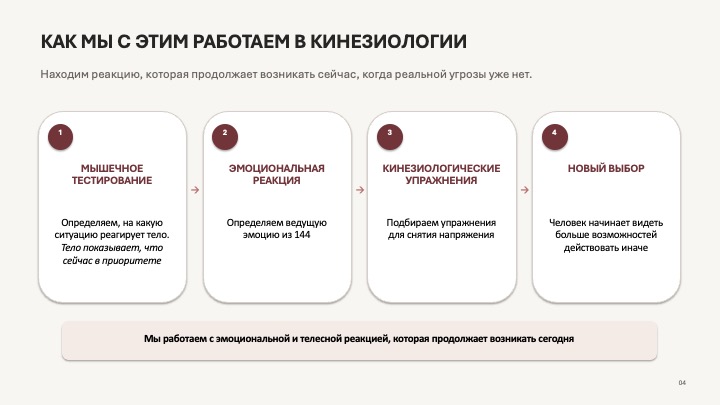
On 23 September 2026, the I All-Russian Expert and Practical Conference “Modern Motherhood: Challenges, Resources, Solutions” was held in Moscow. The organizer was the Regional Public Organization “International Women’s Union” (IWU), and the event was conducted by its Department of Social Design and Crisis Intervention. The official information partner of the conference was the online publication “Posolskaya Zhizn” (Embassy Life).
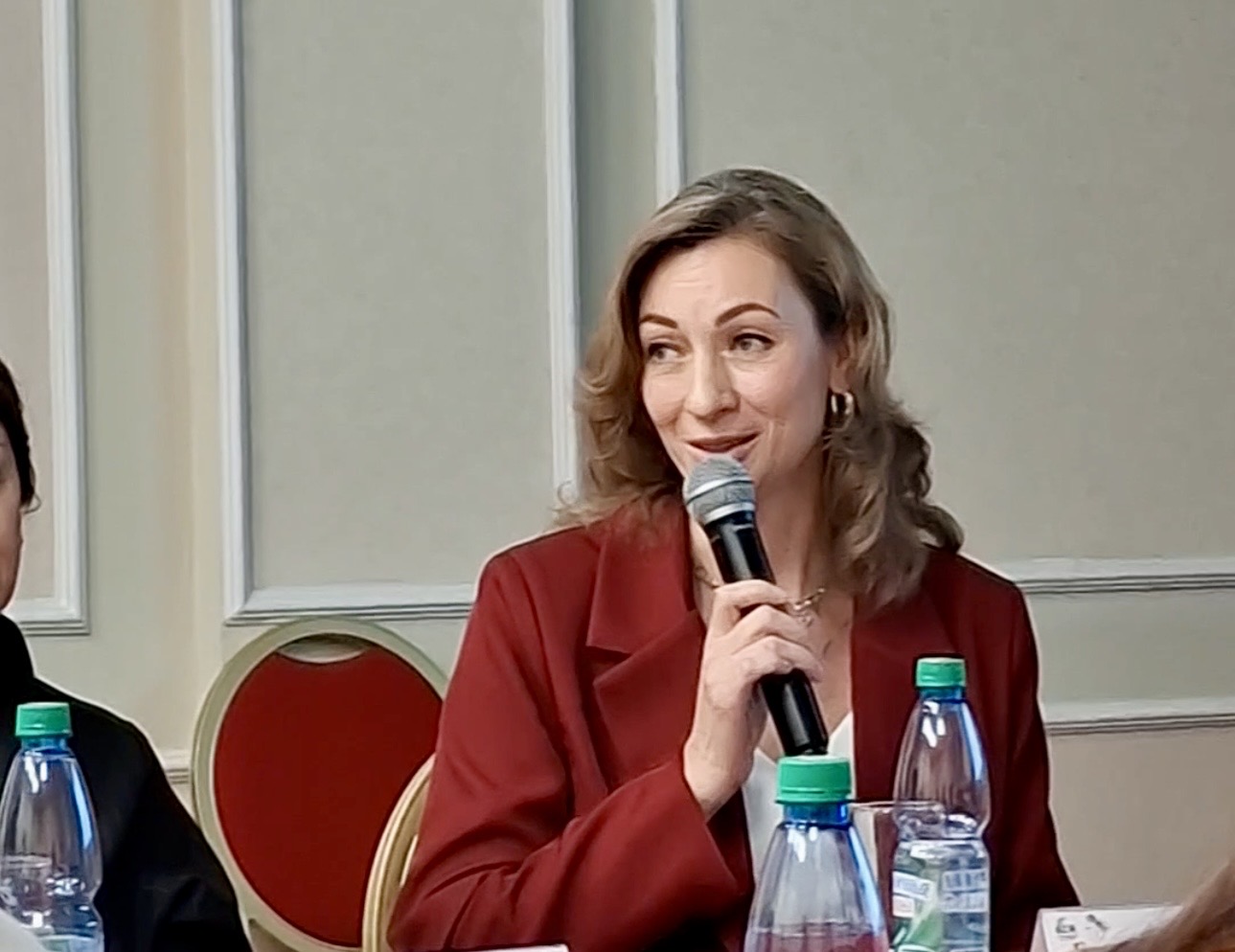
Elena Eliseeva — psychologist, psychology lecturer, and psycho-kinesiologist, a single mother of two children — spoke at the conference as a speaker.
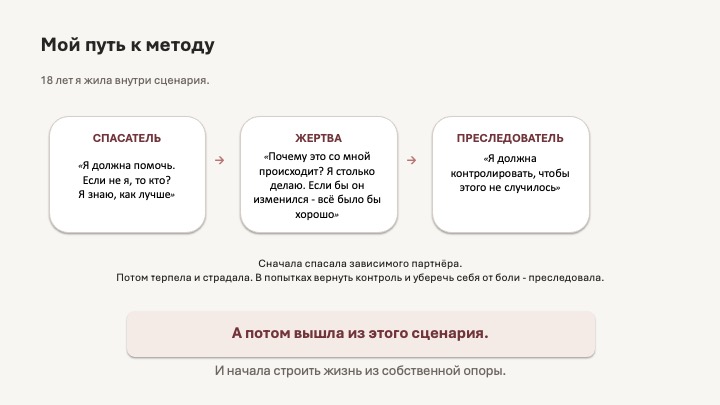
She helps people overcome crisis situations and restore their resources. Her professional experience is based on her own life journey: 18 years of living in a codependency scenario, the loss of her first husband and brother due to addiction, and 9 years of running her own business — all of this led her to the point where, while saving the lives of others, she nearly lost her own. She saved herself and now knows how to help others.
Why Is It Difficult to Get Out of a Relationship Crisis?
At the conference, Elena spoke about why, even when we already understand that a relationship needs to change, it can still be difficult to take that step.
We often describe our experiences through the body: “my legs gave way,” “my heart sank,” “it’s hard to breathe.”
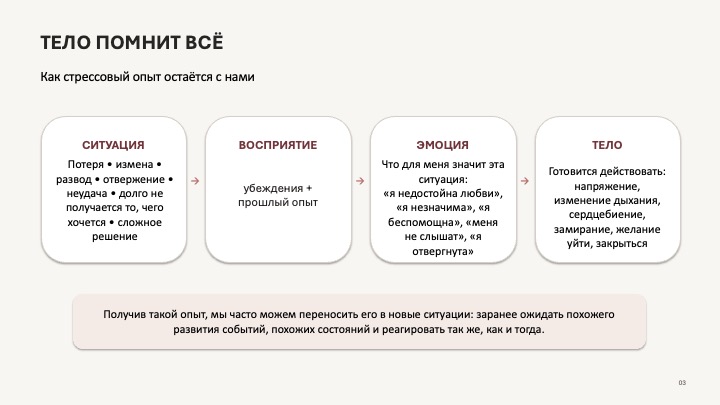
When we face a situation we are not prepared for, the body reacts instantly and leaves a “trace.” In a crisis, this could be, for example, divorce, infidelity, rejection, or a difficult decision.
We perceive this situation through our beliefs and lived experience. That is why the same situation can be perceived completely differently by different people. For example, it becomes frightening, shameful, painful. Thoughts appear: “it’s better to endure it,” “it will resolve itself,” “if I make a decision, others will suffer.”
Against this background, an emotional state forms: “I am insignificant,” “I am not heard,” “I am unworthy of being loved,” “I am rejected,” “I am helpless.”
And the body reacts: tension appears, breathing changes, the heartbeat quickens, and a desire arises to freeze or run away.
When a person remains in this state for a long time, their resources become depleted, and it becomes increasingly difficult for them to see a way out of the situation and find solutions.
Gradually, thoughts become fixed: “Relationships are painful,” “trusting is dangerous,” “they will do this to me again.” And then it becomes difficult for a person to see the possibility of a way out of the situation, to build relationships differently, or even to believe that this is possible.
How We Work with This in Kinesiology
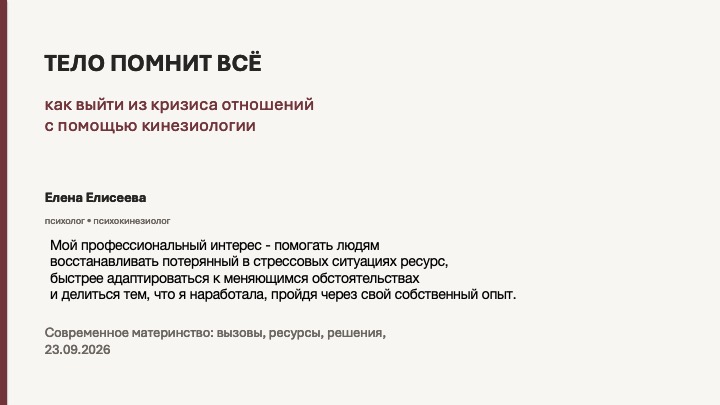
The task is to help reduce the tension in which a person is currently living, so that they can again see options and act for their own benefit.
In psychotherapeutic kinesiology, we use muscle testing as a tool for feedback on a person’s state.
First, we determine which topic the body is currently reacting to.
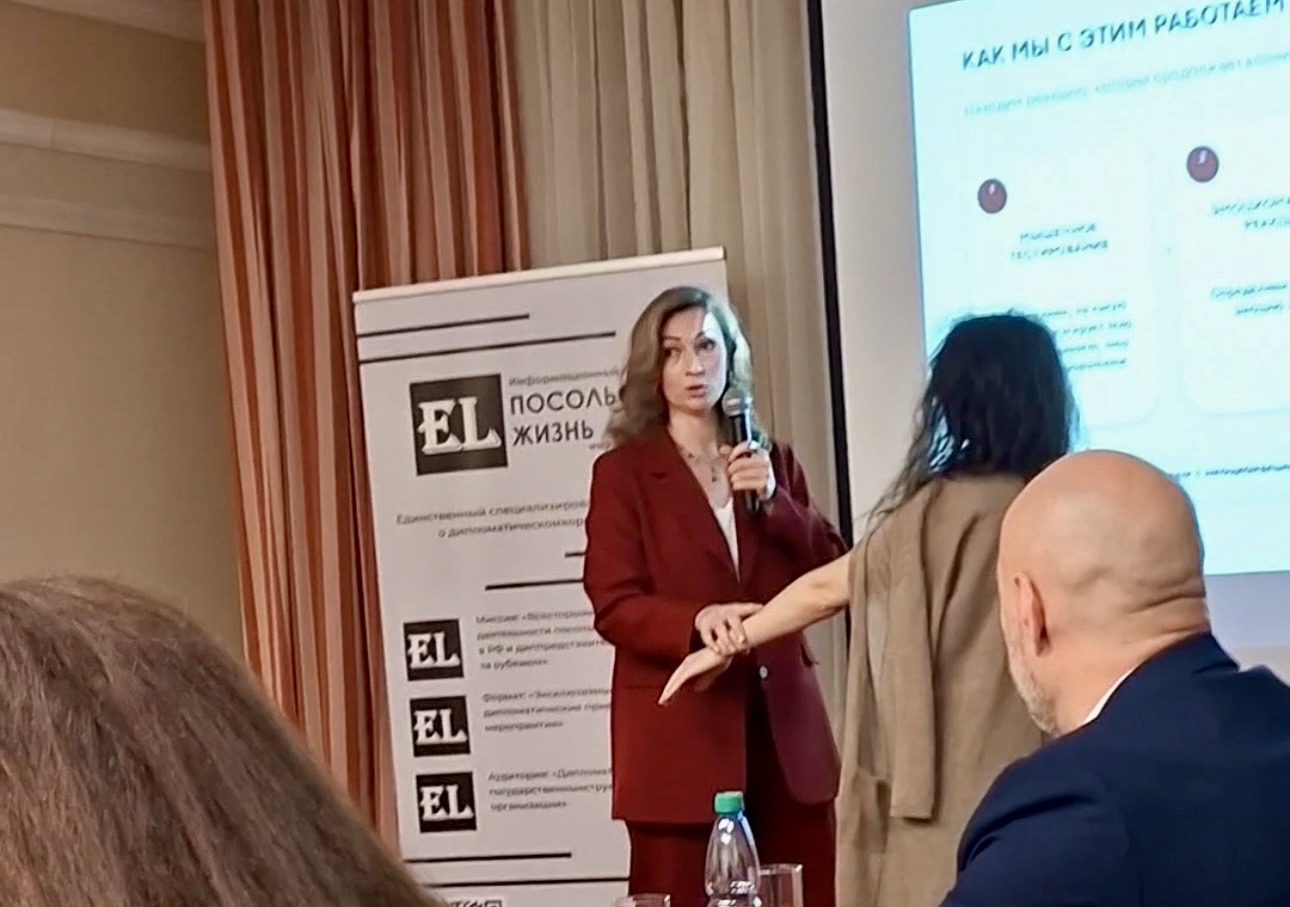
At the presentation, Elena offered a volunteer a simple experiment: she asked her to extend her arm forward and conducted muscle testing: she suggested she think about three tasks she needed to resolve. When she thought about the first task, Elena conducted the test — there was no reaction. The body reacted to the second task. To the third — again, there was no reaction. This means that the second task currently requires more internal resources. Therefore, it can either be postponed or examined more closely to understand what exactly is causing such a reaction.
Then we determine the leading emotional reaction associated with this situation and select kinesiological exercises to reduce tension.
When tension decreases, it becomes easier for a person to see options and act: start a conversation, set their boundaries, rebuild existing relationships differently, or make a decision to end them.
Professional Interest
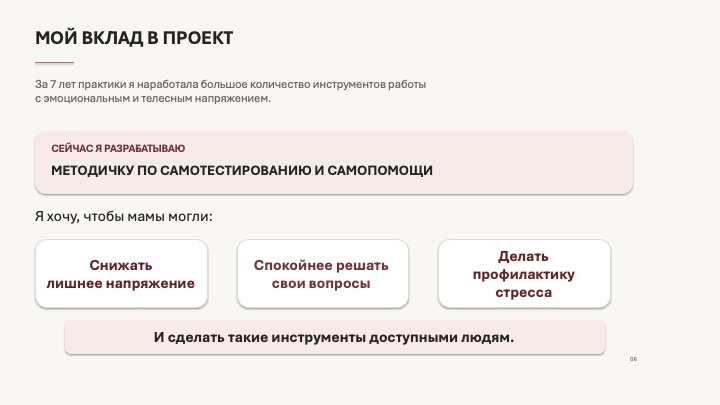
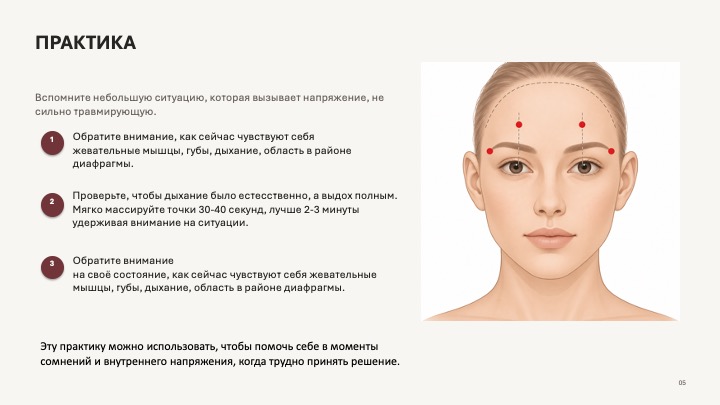
Over seven years of practice, Elena has gathered a large practical arsenal of tools that allow working with information and bodily reactions and using points on the body to reduce tension.
She is currently developing a manual on self-testing and self-help. She wants to make simple tools more accessible so that mothers and their loved ones can independently reduce tension and resolve their issues more calmly. Such tools can also be useful for preventing stress states.
It is important to her that during a difficult period, a person has the opportunity to reduce tension, regain their footing, and move forward.