
On April 28, 2025, the conference “Formation of Russian and Moscow Cultural Identity” was held in Moscow with the support of. The event was dedicated to issues of cultural identity in a multipolar world (the project is being implemented with the support of Grants from the Mayor of Moscow for socially oriented NGOs of the Committee for Public Relations and Youth Policy of the City of Moscow).
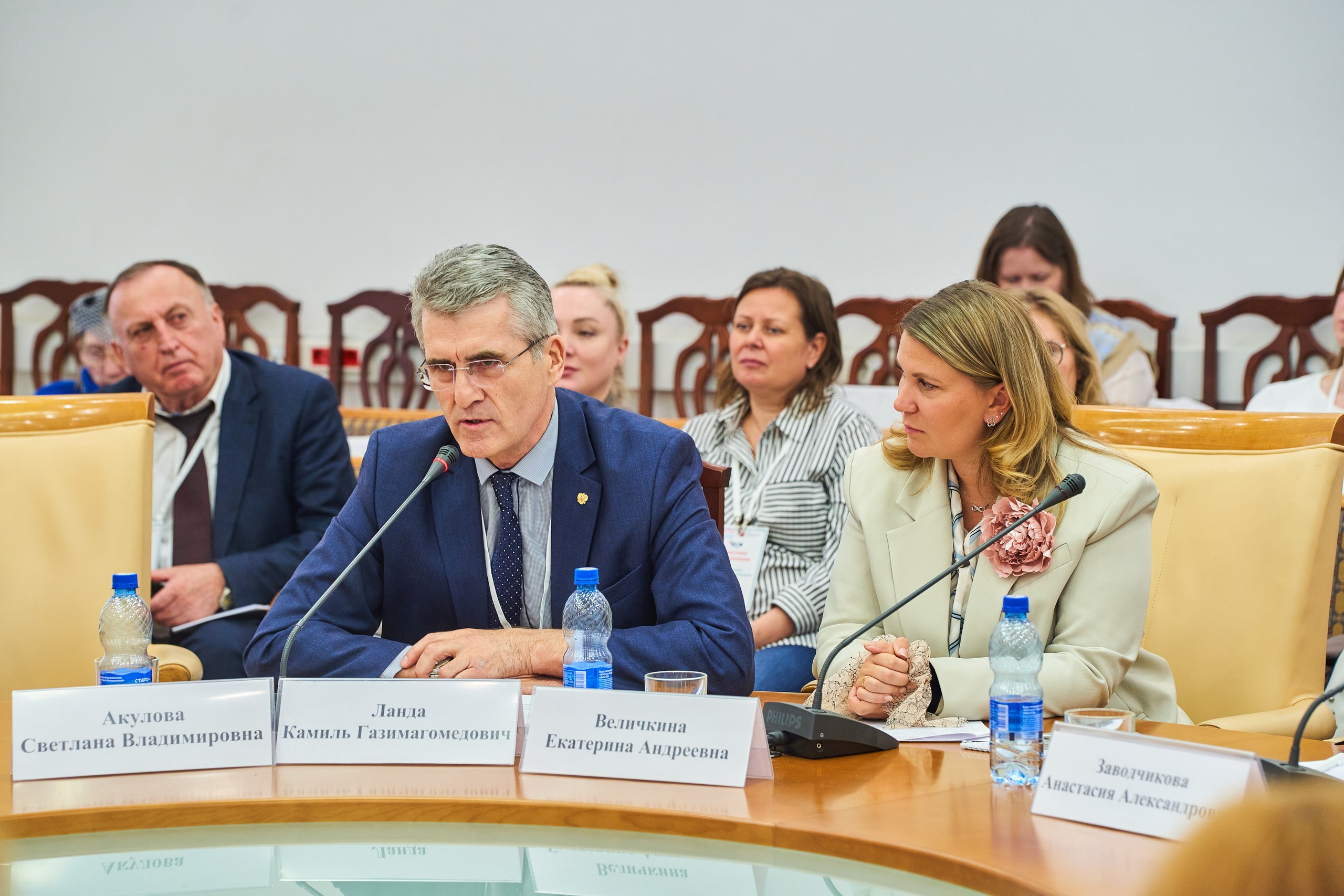 Participated in the Conference as an expert speaker. Kamil Gazimagomedovich Landa, Doctor of Economics, expert of the International Discussion Club “VISION 3000”. Kamil Gazimagomedovich raised a very important topic: “The metropolitan metropolis as a trend maker of intercultural and interethnic relations.”
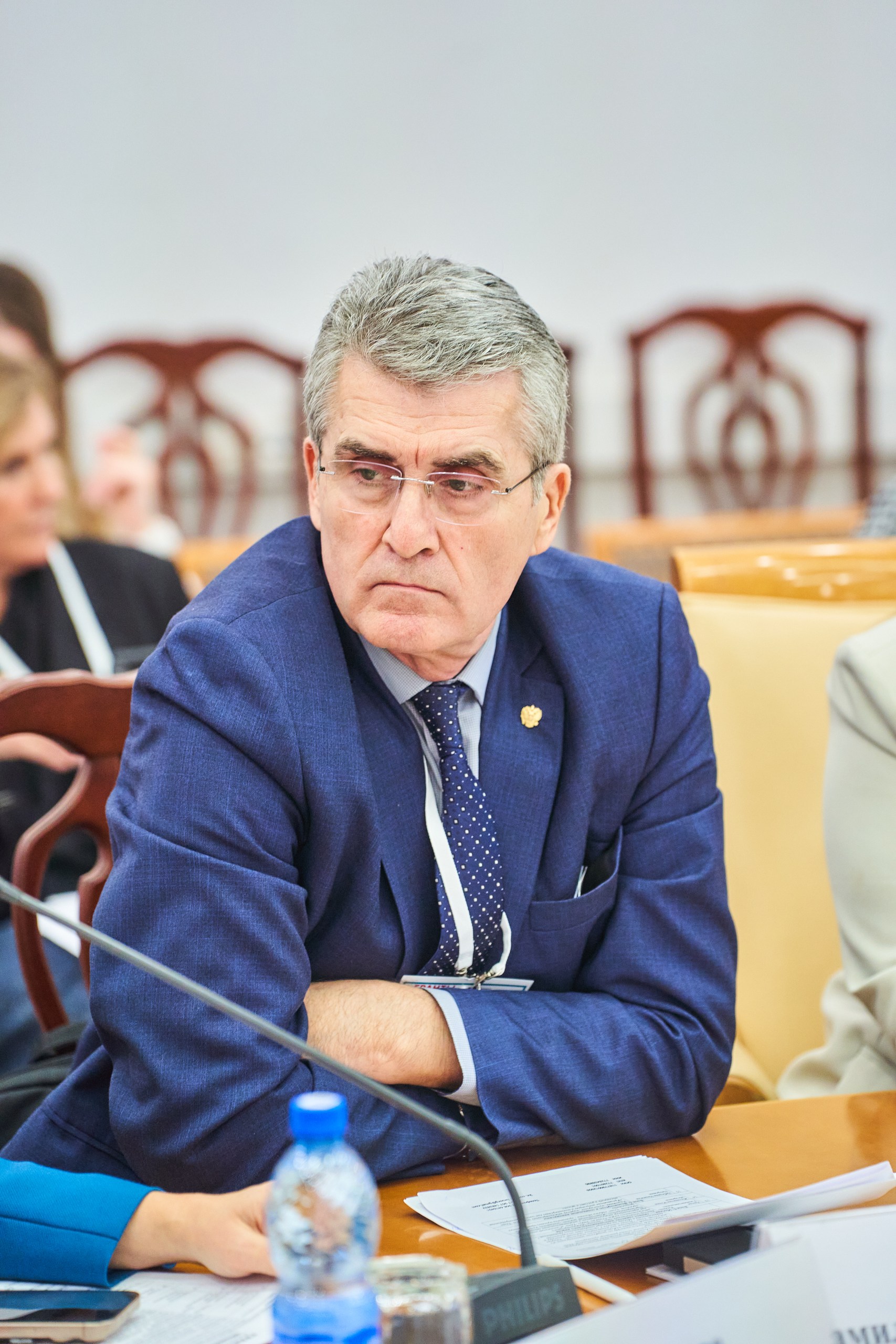
Intercultural and interethnic relations in the Moscow metropolis require increased attention from the executive authorities and public associations in Moscow. It is important to take into account both the accumulated experience and to introduce new creative approaches to strengthen civil peace and harmonize relations between representatives of all nationalities living in the capital. Increasing knowledge about the measures taken contributes to increasing responsibility for the development of ethno-cultural communications and cooperation between different ethnic groups.
In order for the Russian capital to become a megacity of global importance, to remain comfortable and safe, efforts are needed not only by government agencies and law enforcement agencies, but also by the painstaking cultural and consolidating work of NGOs and public associations.
The Moscow government is doing significant work in this direction, given that the city, as the capital, is huge, and is an indicator and example for the whole of Russia, especially in the field of intercultural and interethnic advancement or stagnation. It is for this purpose that festivals and forums are regularly held in Moscow, where residents can get acquainted with the traditions, religions and way of life of different peoples, which contributes to interethnic understanding.
Under the supervision and support of the Moscow Department of National Policy and Interregional Relations, various festivals are held aimed at breaking down interethnic barriers in the simplest and most effective way, organizing various joint events with diasporas and fellow countrymen.
Nevertheless, in the everyday consciousness and in national politics, we continue to have stereotypical ideas about representatives of other ethnic groups.
This is also shown by scientific research conducted by experts in this field. (M. I. Seredina. Ethnic aspects of social interaction in a megalopolis (using Moscow as an example)). According to these data, Muscovites for the most part do not show interest in the national culture of different peoples. Thus, 48% of respondents believe that there is no need to create centers of national cultures and national theaters in Moscow. This indicates an underestimation of the cultural achievements of different ethnic groups, and an indifference to the culture of other peoples living in Moscow.
Stereotypical attitudes are aggravated when people are not familiar with the traditions, customs and mentality of other nations. The situation is complicated by the fact that isolated cases of antisocial behavior of visitors, especially from the North Caucasus (and society does not live without violations), are often exaggerated in some media, the yellow press and odious unscrupulous bloggers, for the sake of likes, attendance and readability of their blogs, spread across the airwaves, as permanent and violated by all visitors. Such “behavior” of writing colleagues makes people of national minorities even more angry.
The behavior of visitors to the capital is not particularly different from the behavior they exhibit in the republic. It differs in that the young guests of the capital behave more freely and feel that few people will ask them for their behavior (levers of influence and influence remain only in the person of leaders and representatives of fellow countrymen), at the same time, some perceive Moscow as something unfriendly, although they are forced to come to Moscow without from a good life in their region, and here they count Blame Moscow for the wrong personnel policy on the ground.
There is another problem of embittering representatives of national minorities. Some law enforcement agencies in Russia apply double standards to Caucasians. There is only one state. The laws are the same. And they interpret and apply laws towards Caucasians as harshly as possible, compared to other offenders, and this is obvious.
And the last one from this area. There is a lot of outrage in the Internet space about the pictures of a church without crosses and mosques with their religious paraphernalia on the minarets next to it. In the media, this is called a “Crusade!” And all this is presented as a requirement of migrant workers coming to work in Russia.
Who is doing this? How can migrant workers, who already have minimal rights in Russia, demand to remove Christian symbols from pictures in a Christian country by and large? Who prints these pictures and where? In Ashgabat or Tashkent? Or maybe in Moscow?
And where are these migrant workers who demand it? Show them! There are none. Meanwhile, the process of pitting some against others, using such an absolutely unacceptable action, continues.
In this scenario, is it possible to solve interethnic problems in the metropolitan area, especially if they are invented, remains rhetorical!?
And the omissions in migration policy are a separate topic.
Misunderstandings and conflicts arise where people do not know someone else’s culture. The lack of a culture of interaction leads to disagreements and contradictions. According to experts, investments in culture help to prevent social problems by reducing the cost of education and healthcare. Some experts in this field also mention the exact figure that a ruble invested by the state in culture frees 25 rubles from education and 25 rubles from healthcare. And in this regard, the state has something to work on.
Conclusions (Recommendations):
- The Permanent Representative Office of the Republic of Dagestan under the President of Russia was an instrument as an intermediary and engaged in analyzing certain negative behavior of fellow countrymen in Moscow. It is necessary to restore the role of the Permanent Mission in the adaptation of newcomers and mediation between cultures. Today, these functions are forced to be performed by public organizations, such as the Patriots of Dagestan Public Council, but their resources are limited.
- Strengthen work with working youth by holding more events aimed at intercultural dialogue and adaptation.
- Schools lack lessons on the life and customs of other peoples and ethnic groups, interethnic interaction and behavior in a different environment, and how to behave with speakers of a different culture, nation, and religion. This can be implemented within the framework of the subject “Talking about important things”.
- Interethnic and intercultural peace and friendship between peoples in a State is not possible if representatives of national minorities are not represented in culture, especially in the Capital of their State of residence. It would be advisable to ensure the representation of national minorities in culture, the media and the film industry, avoiding bias towards one ethnic group.
- To intensify cooperation between the Department of National Policy and Regional Relations with media representatives and bloggers in order to create a positive information background and prevent the spread of negative stereotypes in society.
Moscow, as a trend-maker of intercultural and interethnic relations, should set an example of harmonious cultural interaction. A word spoken in the capital has a huge resonance throughout the country, so it is important that it carries a creative charge!
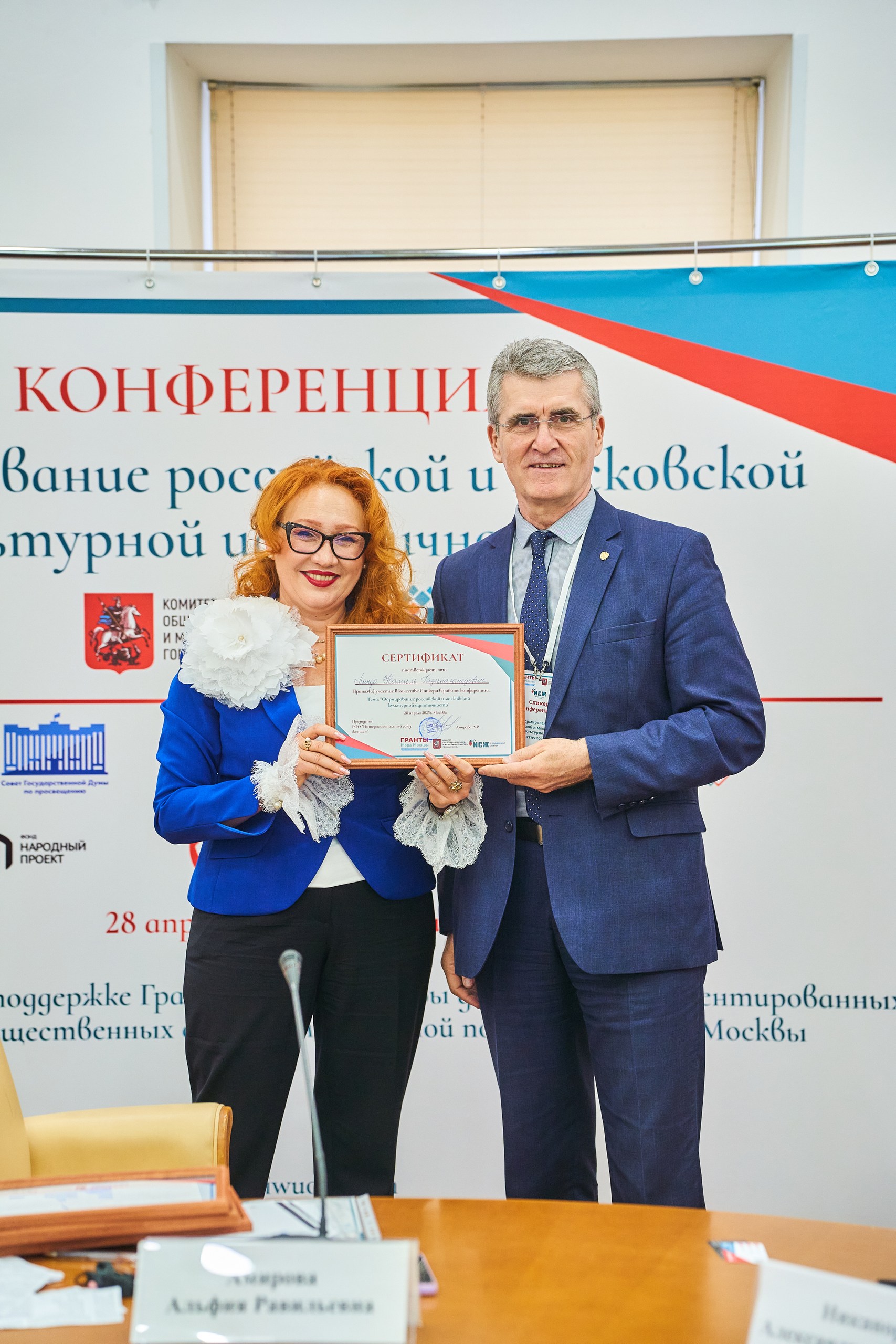
Full recording of the conference: “Formation of Russian and Moscow cultural identity” .
Follow the link for more photos. Mandatory conditions:
When using photos, YOU MUST specify the photographer’s details and the event.
https://anisimovp.ru/disk/28-04-iszh-konferentsiya-fotootchet-bk8vp7