
The venue of the Business Incubator of the Voronezh State Technical University (VSTU) became a point of attraction for leading experts, government officials, and the business community. It successfully hosted an off-site strategic meeting of the international discussion club “VISION 3000” – an event that set new vectors for dialogue on the role of regions in the global economy.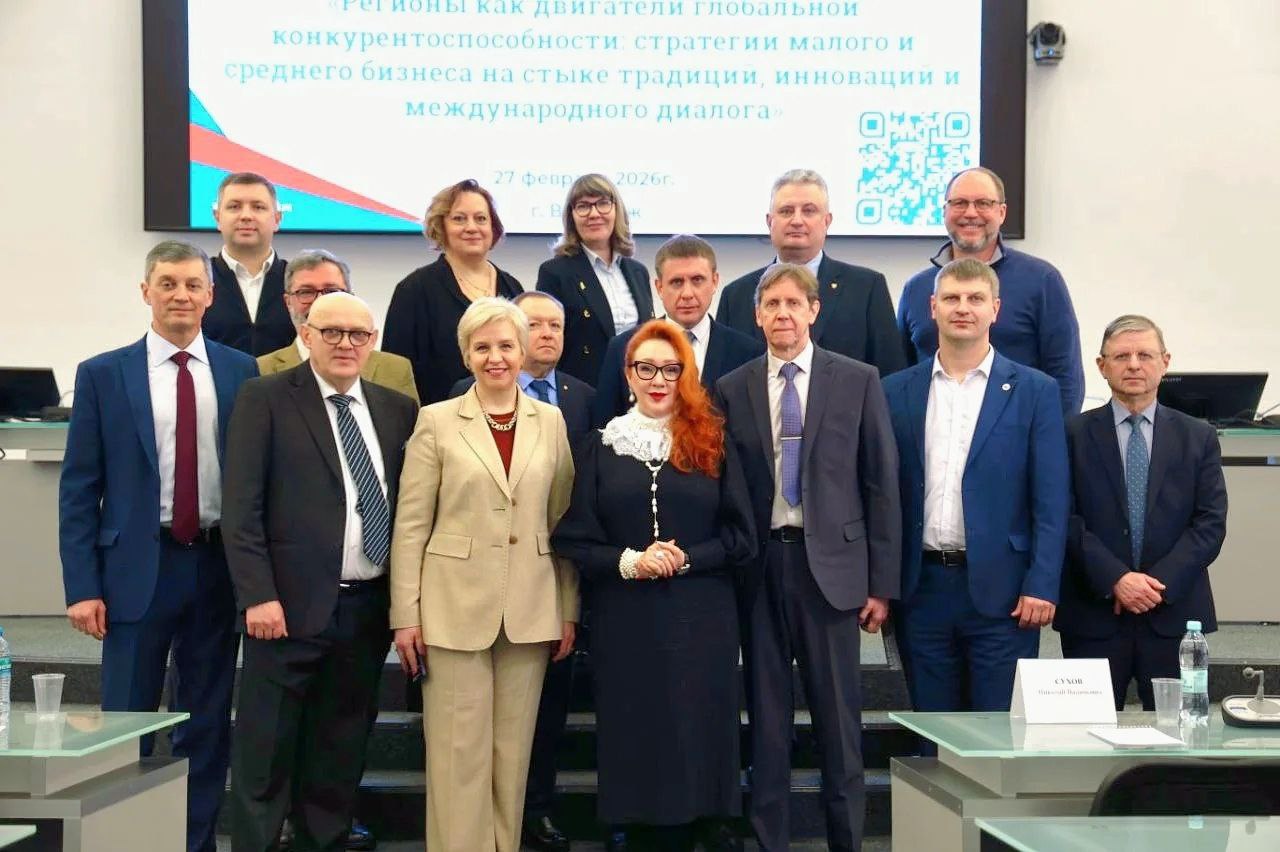
The meeting was organized by the “VISION 3000” club and the Regional Public Organization “International Union of Women,” co-organized by the “Council of Women” led by Margarita Maslennikova, with the support of the Voronezh Region Government and the regional Chamber of Commerce and Industry. The general information partner was the online publication “Posolskaya Zhizn” (Embassy Life), which consistently covers key international initiatives.
Key Theme: Regions as Drivers of Global Change
The meeting’s agenda – “Regions as Engines of Global Competitiveness: Strategies for Small and Medium-Sized Businesses at the Intersection of Traditions, Innovations, and International Dialogue” – proved to be extremely relevant. Participants focused on practical mechanisms for integrating local initiatives into the global economy, the role of mentorship, and the potential of public diplomacy as the “soft power” of territories.
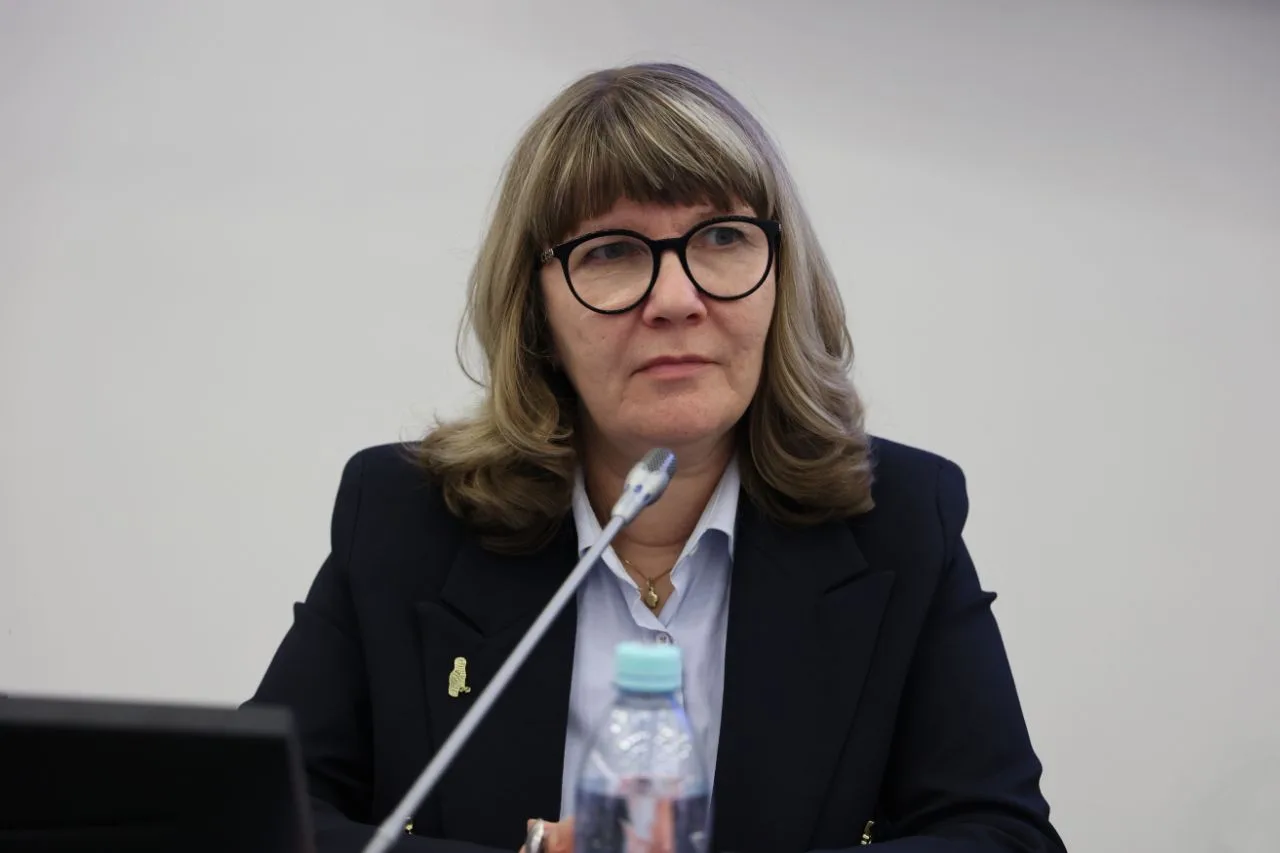 One of the most striking and practically significant speeches was delivered by Olga Aleksandrovna Ofitserova, Head of the Center for Project Solutions “Workshop of Success,” expert and accredited business trainer of the SME Corporation and the Ministry of Economic Development, and Head of the Committee for the Development of Women’s Entrepreneurship of the Voronezh Regional Branch of “Opora Rossii.”
Leadership in Cooperation: Building Bridges Between Regions and Countries
The topic of Olga Ofitserova’s speech – “Leadership in Cooperation: How to Build Bridges Between Regions and Countries” – sparked keen interest among the audience, which brought together entrepreneurs, government officials, and public organization representatives.
The speaker began with a provocative question: “Why do 90% of partnerships fail at the first conflict?” And she immediately provided the answer: most alliances collapse not due to a lack of ambition, but because of the wrong starting point. Entrepreneurs often begin negotiations with goals and plans, forgetting the foundation – a clear understanding of what each side can give and what they want to receive.
Resource Audit: The Foundation of Any Partnership
Olga Aleksandrovna offered participants a simple yet effective tool – a resource audit. Before seeking a partner, it is necessary to conduct an honest inventory and answer two key questions:
-
What valuable things do I have to exchange? (client base, expertise, brand, technologies, logistics, communication platforms).
-
What am I missing to implement the project? (access to new markets, financing, production capacities, administrative resources, sales channels).
“Cooperation is an exchange of values from these two columns. The more accurately you define them, the stronger the foundation of the partnership will be,” the expert emphasized.
From Resources to a System: The Partnership Canvas
However, a simple list of resources is not enough. To turn it into a working model of collaboration, Ofitserova suggested using the Business Model Canvas for Co-Creation of Value (based on the methodology of Andreas Zolnoski). This tool helps visualize the entire partnership picture:
-
Key Partners and Stakeholders – who participates in creating value.
-
Key Resources – what each party contributes.
-
Value Proposition – what each side and the end consumer receive.
-
Channels and Relationships – how interaction occurs.
-
Cost Structure and Revenue Streams – the economics of the partnership.
As a clear example, the speaker presented the case of the International Women’s Ethno-Forum, uniting artisans, craftsmen, and designers of ethnic collections. The project’s partners included the Russian Export Center (REC), the “My Business” ecosystem, and relevant ministries. The partnership canvas helped clearly define roles: the REC provided export expertise and promotion channels, while the designers contributed unique collections and cultural authenticity. As a result, each side gained its benefit: designers gained access to new markets, and the REC met its KPIs for supporting non-resource exports and creative industries.
The 3L Rule: How to Manage a Partnership
Even a perfectly designed partnership can collapse without proper management. Olga Ofitserova introduced her author’s “3L Rule” , which ensures long-term sustainability of cooperation:
-
Long-Term Vision – plan the development of relations for years ahead, think about scaling and the partnership’s evolution.
-
Loyalty to the Majority (Trust) – involve all key partners in managing common resources, create mechanisms for collective decision-making (councils, cooperatives, associations).
-
Legally Binding Agreements – clearly define the rules for exchanging and using resources in written agreements, provide for dispute resolution mechanisms, and create a Project Charter.
The Full Cycle: From Resource to Result
Concluding her speech, the speaker demonstrated how the three tools work as a unified system. Using the same ethno-forum example, she illustrated the full cycle:
-
The resource audit revealed that designers had unique collections but lacked access to Asian markets.
-
The partnership canvas helped structure interaction with the REC.
-
The 3L rule ensured sustainability: the “long-term vision” allowed planning not just a one-time forum but an annual series of events and an online platform; “loyalty/trust” was implemented through creating a common council of designers; “legally binding agreements” were ensured through a clear contract on revenue distribution.
The Main Takeaway
For the meeting participants, Olga Ofitserova’s speech served as a practical guide to action. The key message was: “Our strength lies in understanding what we are good at. Our growth lies in seeking those who complement us.”
Participants received a ready-made algorithm for building successful partnerships – from an honest audit of their own resources to creating sustainable, long-term cooperations capable of bringing regional businesses to the international level. In today’s world, where global challenges require pooling efforts, cooperation becomes a key growth strategy for small and medium-sized enterprises.
Olga Aleksandrovna Ofitserova’s full presentation is available for download on the official website of the international discussion club “VISION 3000”.