
On April 28, 2025, the conference “Formation of Russian and Moscow Cultural Identity” was held in Moscow with the support of. The event was dedicated to issues of cultural identity in a multipolar world (the project is being implemented with the support of Grants from the Mayor of Moscow for socially oriented NGOs of the Committee for Public Relations and Youth Policy of the City of Moscow).
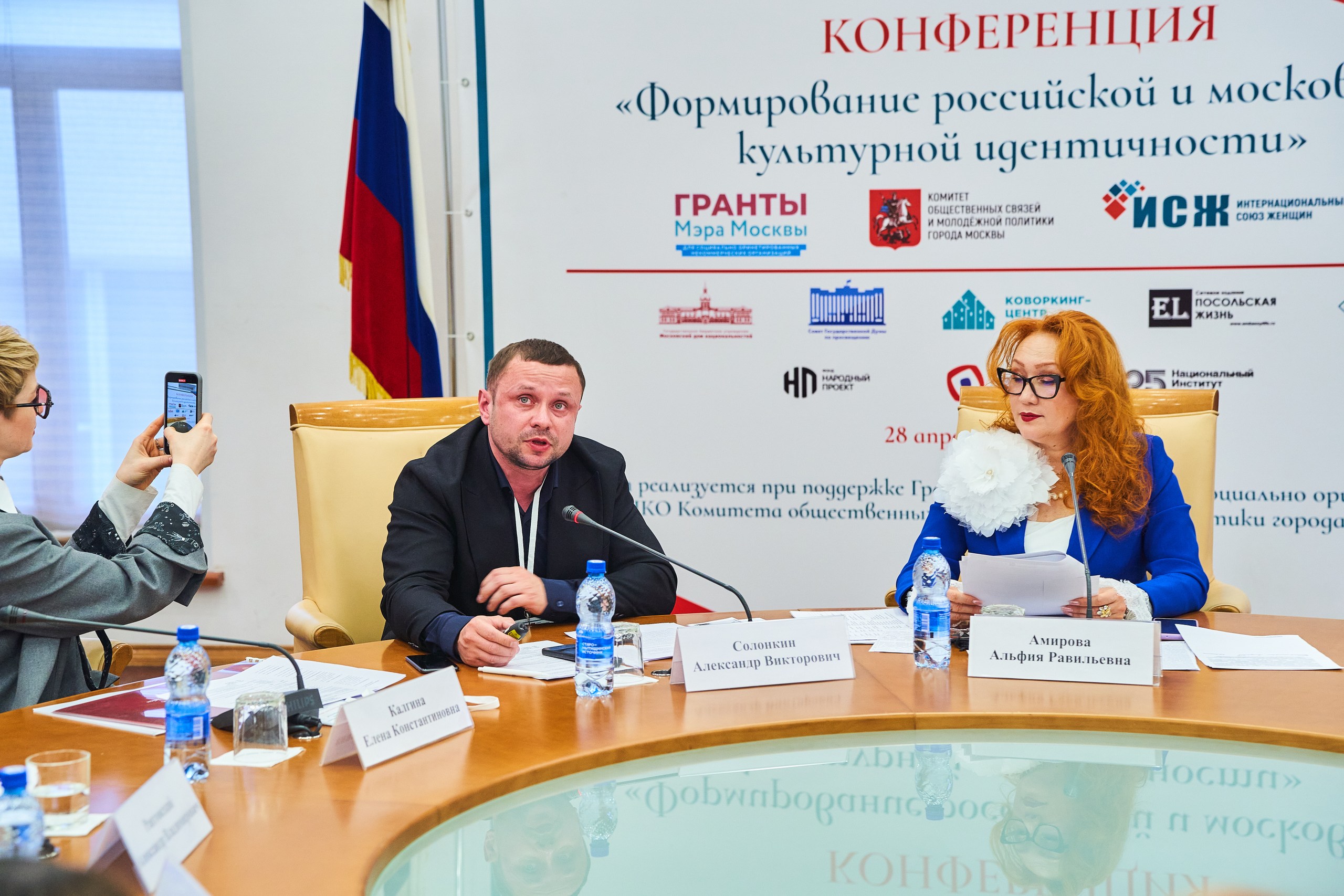 Participated in the Conference as an expert speaker. Solonkin Alexander Viktorovich, Advisor to the Deputy Chairman of the State Duma of the Russian Federation. Chairman of the Expert Council on Youth Policy, Culture, Education and Child Safety of the State Duma of the Russian Federation. Alexander Viktorovich made a presentation on the topic: “Formation of Russian and Moscow cultural identity”.
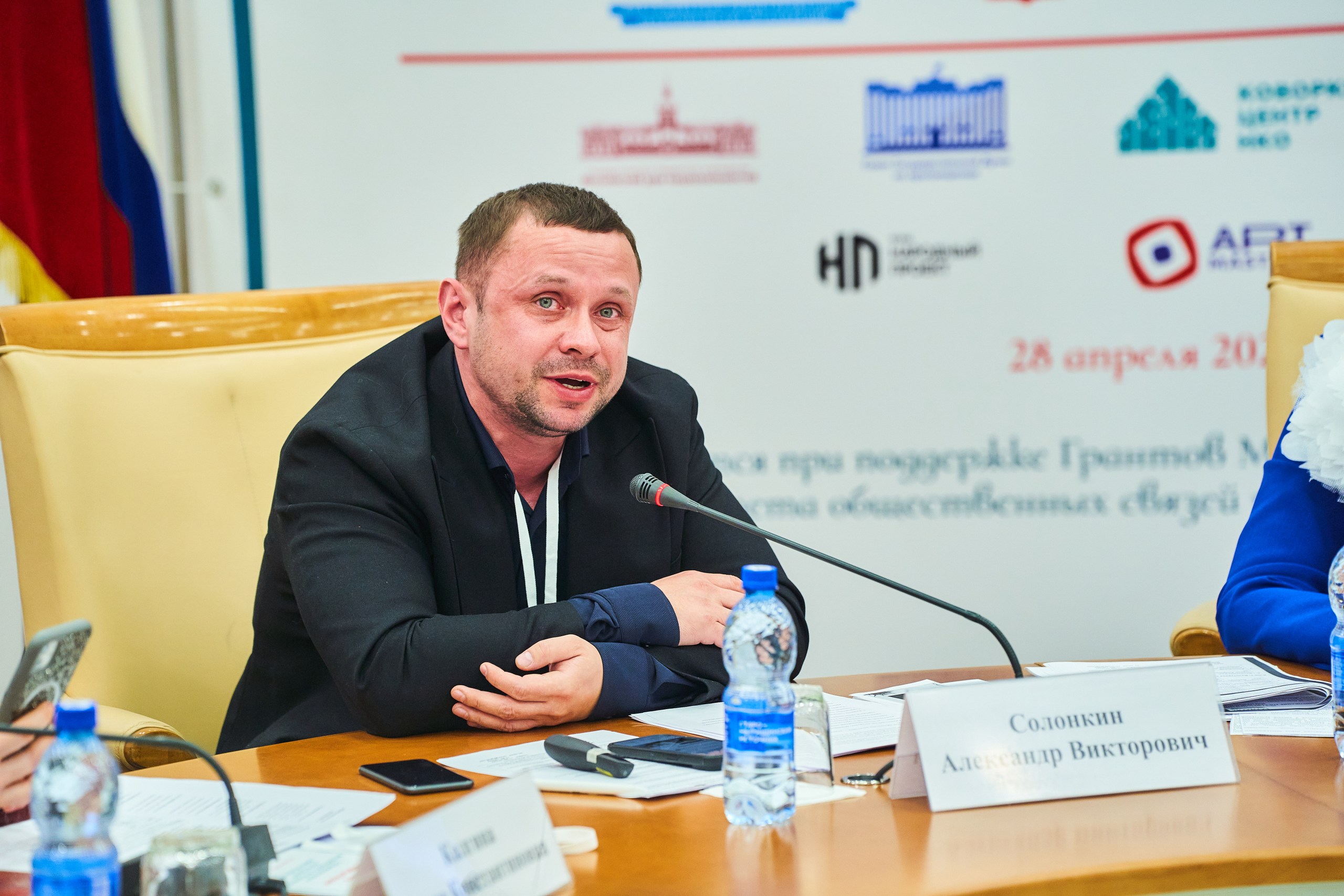
- Urban studies as a tool for shaping the image of the capital
Moscow is not only the largest metropolis in Russia, but also the most important center of cultural, business and tourist life. Modern urbanism is becoming a means of shaping the image of the capital: urban space is designed with convenience, aesthetics and sustainable development in mind. The development of the urban environment directly affects the perception of Moscow by residents and tourists.
Urban development: from residential to multifunctional
Current trends show a rejection of the strict division of the city into “residential areas” and a business center. Examples:
– Taganka and the Kursky Railway Station area are turning into dynamic spaces with creative clusters, coworking spaces, cafes and event venues.
– Basmanny district: developing as a zone of creative and gastronomic tourism.
– ZIL and former industrial zones: renovation transforms them into full-fledged residential and cultural areas (for example, “ZILART”).
New-format shopping and entertainment centers
Modern shopping malls are not just places of shopping, but entire urban spaces that combine food, recreation, art and shopping.:
– Atrium Shopping and Entertainment Center: updated interior, zoning, stylish food court, collaborations with local brands.
– Aviapark and Metropolis: integration of art objects, open spaces and interactive zones.
– The new spaces include coworking spaces, themed cafes, and yoga studios, making them centers of attraction after work hours.
Street art and urban aesthetics
Street art is an integral part of modern Moscow urbanism. He transforms the urban environment, creates a visual language that unites residents.:
– Areas with bright graffiti and murals: Arbat, Khitrovka, Presnensky district.
– The Real Art project and street art festivals at VDNKH, Artplay and other venues.
– Art objects become points of attraction and “instagram” locations.
Modern food courts as an urban phenomenon:
Moscow’s food courts are more than just places to eat. These are spaces of communication, urban culture and new gastronomic trends.:
– “Depot” (in Belarusian): The former tram depot has been turned into a gastromarket with restaurants, bars and a concert program.
– “Central Market” and “Danilovsky Market”: a combination of trade, food zones and cultural events.
– Flacon Food Market: a vivid example of an art space and a food location in one.
Transport and pedestrian infrastructure
– The development of bike paths, electric scooter rentals, and the expansion of pedestrian zones (for example, Nikolskaya Street, Kuznetsky Bridge).
– The advent of the MCC and the MCC has made movement around the city more comfortable, relieved the load on the center.
Parks and public spaces
Parks are becoming not only green areas, but also playgrounds for recreation, sports and events.:
– Zaryadye: a unique example of the synthesis of nature, technology and urbanism.
– VDNKH — restoration of historical architecture and addition of new pavilions.
Gorky Park and Muzeon are an example of a successful redesign that includes sports, art, and leisure.
Modern urbanism in Moscow is actively developing not only parks, but also new forms of public spaces, from embankments to former industrial facilities turned into places of attraction for citizens.- Bakery No. 9: the industrial site of the 1930s on Savelovskaya Street was rethought and turned into a cultural and business cluster. Cafes, exhibition spaces, design shops and educational projects are located here.- GES-2: transformation of the former power plant into a contemporary art center under the curatorship of the V-A-C Foundation. The space has become not only an exhibition venue, but also a meeting place, concerts and lectures.These facilities highlight the main trend — Moscow is becoming an increasingly multifunctional, open and comfortable urban environment, where every resident will find a place for life, leisure and self-realization.
Modern urban approaches are actively used not only in Moscow, but also in other cities of Russia and the world. Below are examples of significant spaces that have been opened in recent years.:
Russia:– Sevkabel Port (Saint Petersburg): a project on the territory of a former cable factory on Vasilyevsky Island. The space has become a new cultural center of the city with a promenade, stages, cafes and exhibitions.
– Zarechny Park (Tyumen): a modernized urban park with modern landscaping, recreation areas and bike routes.
Foreign examples:
– “The High Line” (extensions 2019-2023, New York, USA): the development of the linear park on the site of the former railway line continues. The new sites include interactive installations and a recreation area.
– “Superkilen Park” (Copenhagen, Denmark): A multicultural space with elements from more than 60 countries, representing a collaboration of art, sports and urban infrastructure.
– Bjørvika (Oslo, Norway): renovation of the port area into a cultural center with the Munch Museum, Opera House and promenades.
Conclusion: a city for people
The modern urbanism of Moscow is the desire to create a city that is convenient and beautiful for living, working and relaxing. Architecture, transport, cultural and shopping spaces form the image of the capital as a dynamic and open metropolis. Moscow today is the city of the future, which combines tradition and innovation.
Full recording of the conference: “Formation of Russian and Moscow cultural identity” .
Organizer of the Conference “International Women’s Union”
Information partner Online publication “Embassy Life”
Follow the link for more photos. Mandatory conditions:
When using photos, YOU MUST specify the photographer’s details and the event.
https://anisimovp.ru/disk/28-04-iszh-konferentsiya-fotootchet-bk8vp7