
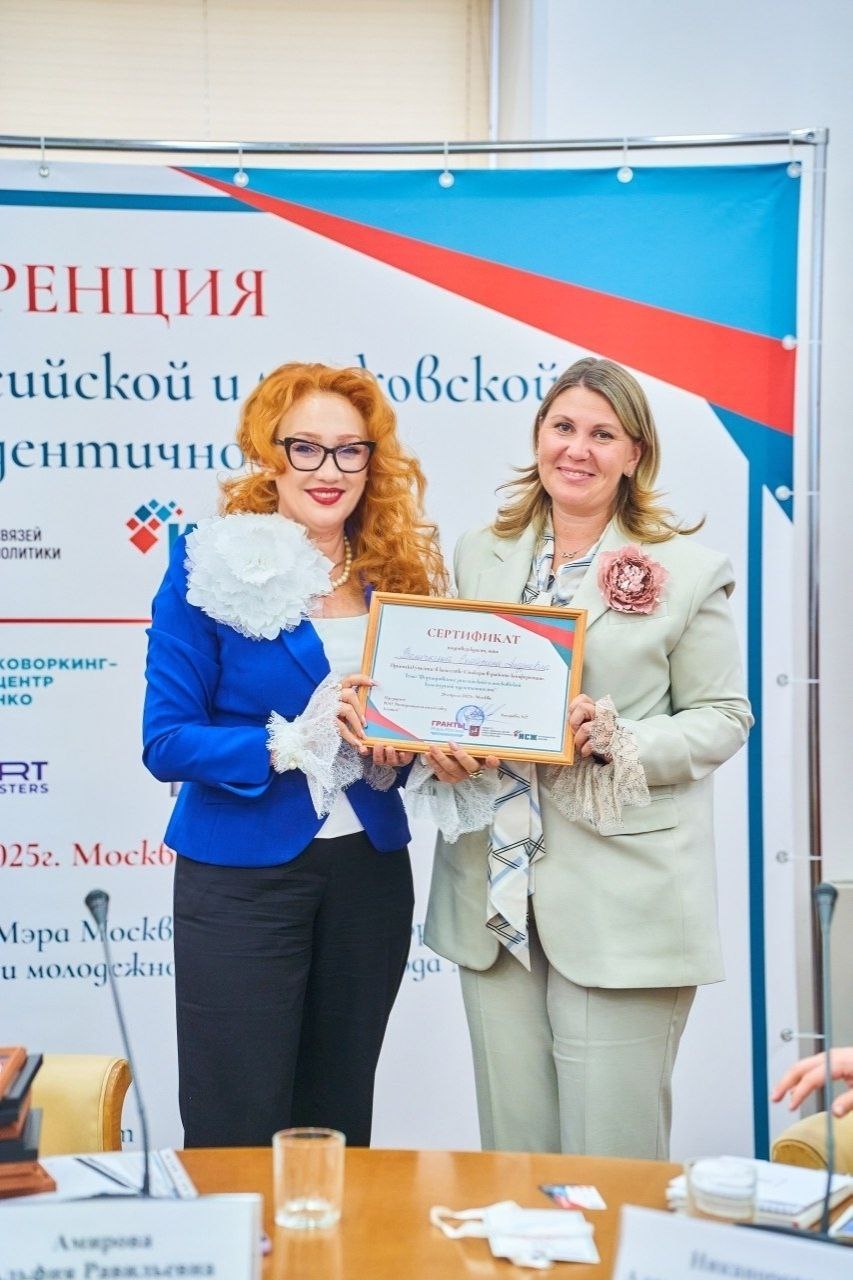
On April 28, 2025, the conference “Formation of Russian and Moscow Cultural Identity” was held in Moscow with the support of. The event was dedicated to issues of cultural identity in a multipolar world (the project is being implemented with the support of Grants from the Mayor of Moscow for socially oriented NGOs of the Committee for Public Relations and Youth Policy of the City of Moscow).
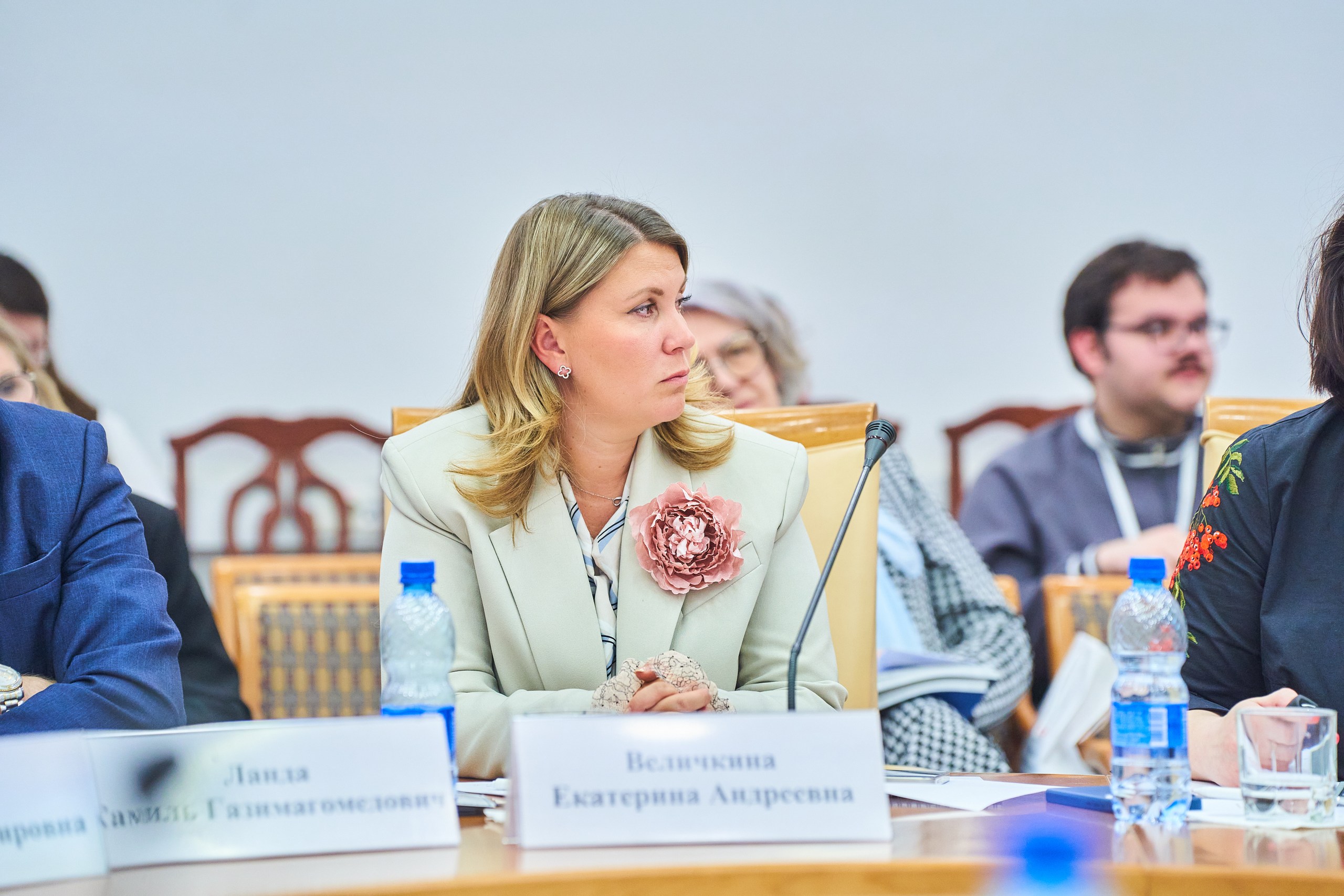
Ekaterina Andreevna Velichkina, philanthropist, media blogger (audience 2.5 million subscribers), Executive Director of the International Women’s Union, took part in the Conference as an expert speaker.
Ekaterina Andreevna highlighted the topic: “Moscow’s digital Code: media ethics and the formation of cultural identity in the online space.”
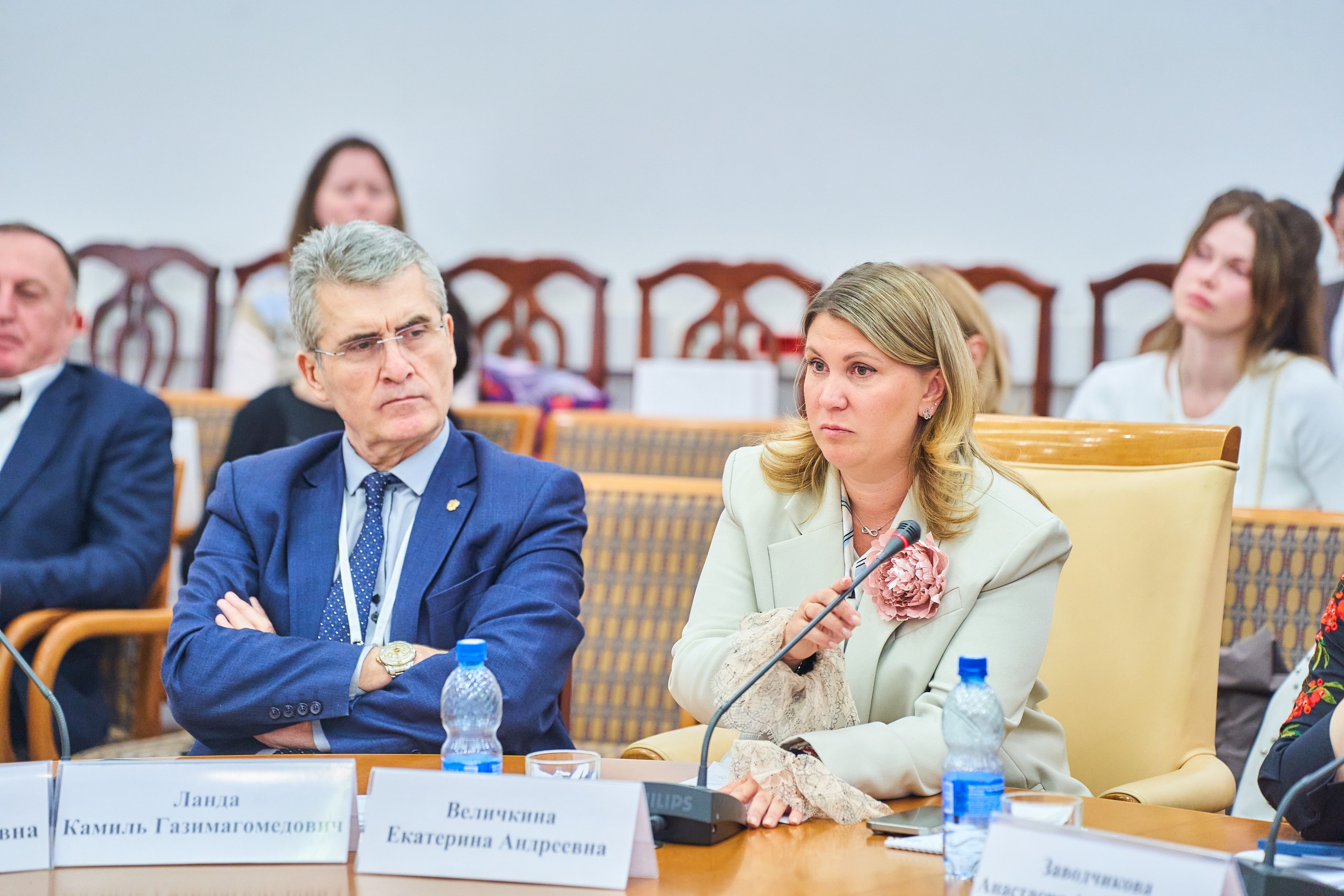
Introduction
Dear participants of the conference, dear Muscovites and guests of the capital!
I, Ekaterina Andreevna Velichkina, Head of the Department for Ethical Standards of Media Content at the Center for Responsible Blogging at the Moscow Chamber of Commerce and Industry, am pleased to present you a study revealing how digital technologies are becoming a new language of cultural dialogue.
Why is this relevant?
Moscow is a city where the number of digital cultural projects has increased 4-fold over the past 5 years (Mosgorstat data, 2023). Every day, 3 million users interact with content about the capital through social media, turning its history into a living, interactive reality.
The main part
1. The role of digital space in the formation of cultural identity
Digit as a “memory saver”:
Online tours: In 2023, 4 million people visited virtual tours of Moscow’s museums, 60% of them were young people under the age of 30 (Yandex.Maps report).
AR-reconstructions: The Moscow 1945 project with 3D models of the festive city after the Victory gathered 500 thousand views in a month.
Digital twins: 90% of the architectural monuments of the center of Moscow have been digitized, including lost objects such as the 15th century Zaryadye.
Educational emphasis for the guests of the capital:
Did you know that through the app “Moscow: sounds of history” can you hear how the streets of the city sounded in the 19th century? For example, the ringing of the bells of the Holy Monastery, which was destroyed in 1937.
2. Ethical standards of media content
The struggle for authenticity:
Fake news in numbers: In 2023, 45% of false news about Moscow concerned the restoration of monuments. The Center for Responsible Blogging has launched the Pravda Map— an interactive platform with archived photos and documents.
Code of Ethics: 200 bloggers have signed the Digital Patriot Charter, pledging to check sources before publishing materials about cultural heritage.
Educational emphasis for Muscovites:
Ethics is not boring! Participate in the “Detective of Lies” quest from the Moscow Chamber of Commerce and Industry: find fakes in historical publications and receive prizes for exposure.
3. Digital space opportunities for Moscow’s development
Innovation for everyone:
For tourists:
The project “Night Moscow in VR” — guided tours of illuminated streets with the effect of presence. Available in 8 languages.
The @Moscowgreeter bot in Telegram selects individual routes based on interests for free.
For citizens:
The Moscow: Your Footprint platform allows you to create digital time capsules with personal stories about your favorite places. 10 thousand records have already been collected.
Educational emphasis:
Digital tools are a “bridge” between generations. For example, schoolchildren record podcasts about WWII veterans, and their grandfathers participate in online interviews.
4. The Russian language as a unifying factor
Language in the digital dimension:
The Living Word project: 1,000 audio recordings of Pushkin and Tsvetaeva’s poems performed by Moscow actors are available in podcasts.
Multilingualism Online:
The Ethnodialog platform translates tours of Moscow into 25 languages of the peoples of Russia.
Flash mob #My National Library has collected 50,000 videos of poetry readings in national languages in the capital’s parks.
Educational emphasis:
The Russian language on the Internet is not only text, but also “digital folklore”. For example, memes with quotes from literary classics go viral, involving young people in the study of literature.
Conclusion
Moscow in the digital age is a city where everyone can become a co—author of its cultural code.
A call to action:
To the guests of the capital: Participate in the Digital Footprint project— Leave reviews about the sights via AR tags in the app. The best works will be included in the virtual gallery.
For bloggers: Use the hashtag #Ethnomoscow for posts about the cultural diversity of the capital. The authors of the top 100 publications will have access to exclusive guided tours.
Muscovites: Become “digital volunteers” — help digitize archival photos on the “Past in Pixels” platform.
Finale:
Cultural identity is not an archive, but a living dialogue. Let’s create a Moscow where hashtags become historical sources and likes become a tool for preserving memory.
Thank you for your attention!
P.S.
A QR code on the screen will open access to the Digital Encyclopedia of Moscow — 1000 rare photos, 3D models and interviews with local historians.
Full recording of the conference: “Formation of Russian and Moscow cultural identity” .
Follow the link for more photos. Mandatory conditions:
When using photos, YOU MUST specify the photographer’s details and the event.
https://anisimovp.ru/disk/28-04-iszh-konferentsiya-fotootchet-bk8vp7