
Voronezh Once Again Confirmed Its Status as a Platform for Strategic Dialogue: The Business Incubator of VSTU Hosted an Off-Site Meeting of the International Discussion Club “VISION 3000.” Experts, Government Officials, and Business Leaders Sought Answers to the Question of How Regional Companies Can Integrate into the Global Agenda While Maintaining Competitiveness and Traditional Values.
The meeting was organized by the “VISION 3000” club and the Regional Public Organization “International Union of Women,” co-organized by the “Council of Women” led by Margarita Maslennikova, with the support of the Voronezh Region Government and the regional Chamber of Commerce and Industry. The general information partner was the online publication “Posolskaya Zhizn” (Embassy Life), which consistently covers key international initiatives.
Key Theme: Regions as Drivers of Global Change
The meeting’s agenda – “Regions as Engines of Global Competitiveness: Strategies for Small and Medium-Sized Businesses at the Intersection of Traditions, Innovations, and International Dialogue” – proved to be extremely relevant. Participants focused on practical mechanisms for integrating local initiatives into the global economy, the role of mentorship, and the potential of public diplomacy as the “soft power” of territories.
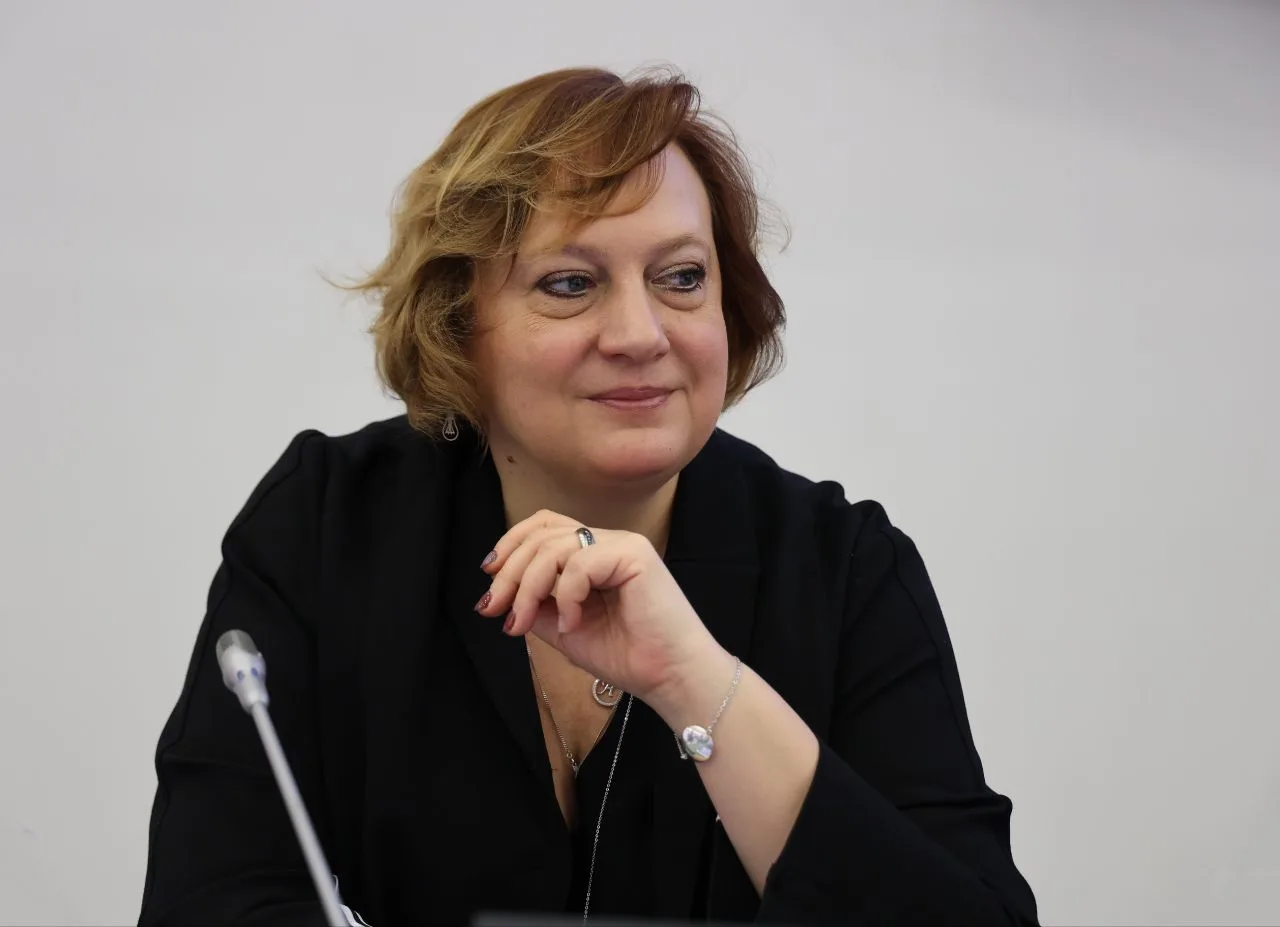 One of the most profound and timely speeches was delivered by Anna Yuryevna Kireeva, Director of the Autonomous Non-Profit Organization of Additional Professional Education “Straktika,” author of acceleration programs, and an expert in the field of sustainable development and building trusting relationships in business.
ESG Agenda, Russian Style: Why ECG is More Important Than Reports
Anna Kireeva began with an unexpected but precise thesis: in the modern world, trust has become the currency of sustainable business. However, for Russian companies, the classic ESG agenda requires reinterpretation considering national characteristics and current economic realities.
The speaker presented her original view on how the principles of sustainable development are turning into a real competitive advantage and introduced participants to the concept of the ECG rating – a comprehensive assessment of a company’s “health” that determines its level of reliability, social and environmental responsibility.
What is Trust in and Towards an Organization?
In her speech, the expert clearly distinguished between two key concepts: trust in an organization and trust towards an organization.
Trust in an organization is the confidence of employees that colleagues and managers will act competently, decently, and with consideration for common interests, even in conditions of uncertainty. “For the trustor, this means a willingness to be vulnerable, without using mechanisms of protection and control. For the trusted, it means accepting the responsibility and conditions imposed by trust,” Anna Kireeva explained.
Trust towards an organization is a more complex construct. It is the confidence of external and internal stakeholders that the company acts:
- Competently – effectively achieving its goals, producing quality products;
- Decently and honestly – keeping promises, being transparent and fair;
- With consideration for interests – respecting the needs of employees, customers, society, and the state.
The ECG Rating: Ecology, Personnel, Governance
The key part of the presentation was introducing the ECG rating as a tool adapted to Russian realities. Unlike Western counterparts, this system evaluates companies based on three fundamental areas:
| Component | What is Assessed | Whose Trust it Forms |
|---|---|---|
| Ecology | Degree of environmental impact, use of “green” technologies, environmental projects | Trust of local communities and regulators |
| Personnel (Cadres) | Level of wages, social programs, family support, charity | Trust of employees and consumers |
| Governance (State) | Tax history, business reputation, investments in regions | Trust of the state, investors, and partners |
Practical Tools for Different Types of Businesses
The speech was particularly valuable due to the specific recommendations adapted for various fields of activity. Anna Kireeva emphasized that there are no universal solutions – each business must build its own trust strategy.
For Industrial Enterprises:
- Creation of “Health Centers” at production sites;
- Programs supporting employees with large families;
- Organizing summer vacations for employees’ children;
- Support for enterprise veterans.
For IT Companies:
- Payment for additional education;
- Flexible schedules and remote work options;
- Career guidance projects for schoolchildren.
For Retail Chains:
- Support for local food producers;
- Social prices for preferential categories;
- Employment of students and graduates.
For Service Sector Companies:
- Support for employees’ families (preferential terms for services);
- Social elevators for youth (internships, mentoring);
- Creating an inclusive environment.
Key Principles for Success
The expert highlighted several universal principles that make trust programs effective specifically in the Russian context:
✅ Transparency – open data and reporting;
✅ Collaboration – projects involving local communities;
✅ Consistency – regular actions, not one-off events;
✅ Measurability – specific indicators and goals;
✅ Personal involvement of leaders – top managers must participate personally;
✅ Quick visible results – improvements within 1-2 months.
What to Avoid:
❌ “Greenwashing” – claims without real action;
❌ Complex terminology in communication;
❌ Projects that disregard local specifics.
Main Conclusion
Concluding her speech, Anna Kireeva formulated the key message: “ECG is not about reporting, it’s the language of trust.” For Russian companies in the current conditions, this language is becoming a critically important tool:
- Internally – for retaining and motivating the team;
- Externally – for maintaining reputation and social legitimacy.
Companies that are already building their sustainable development strategy as a system of trust create a long-term competitive advantage that reduces risks, increases stakeholder loyalty, and provides resources for development.
In a world overloaded with information and where crises follow one another, trust remains the most scarce and most valuable resource. And it is the ECG agenda that allows this resource to be accumulated and capitalized.
The full presentation by Anna Yuryevna Kireeva is available for download on the official website of the International Discussion Club “VISION 3000” and partner resources.